The Hidden Code: Software Mechanics Driving Live Dealer Options and Mobile Payments Across Global Gaming Sites
Mia Coleman · Jul 21, 2026
The Hidden Code: Software Mechanics Driving Live Dealer Options and Mobile Payments Across Global Gaming Sites
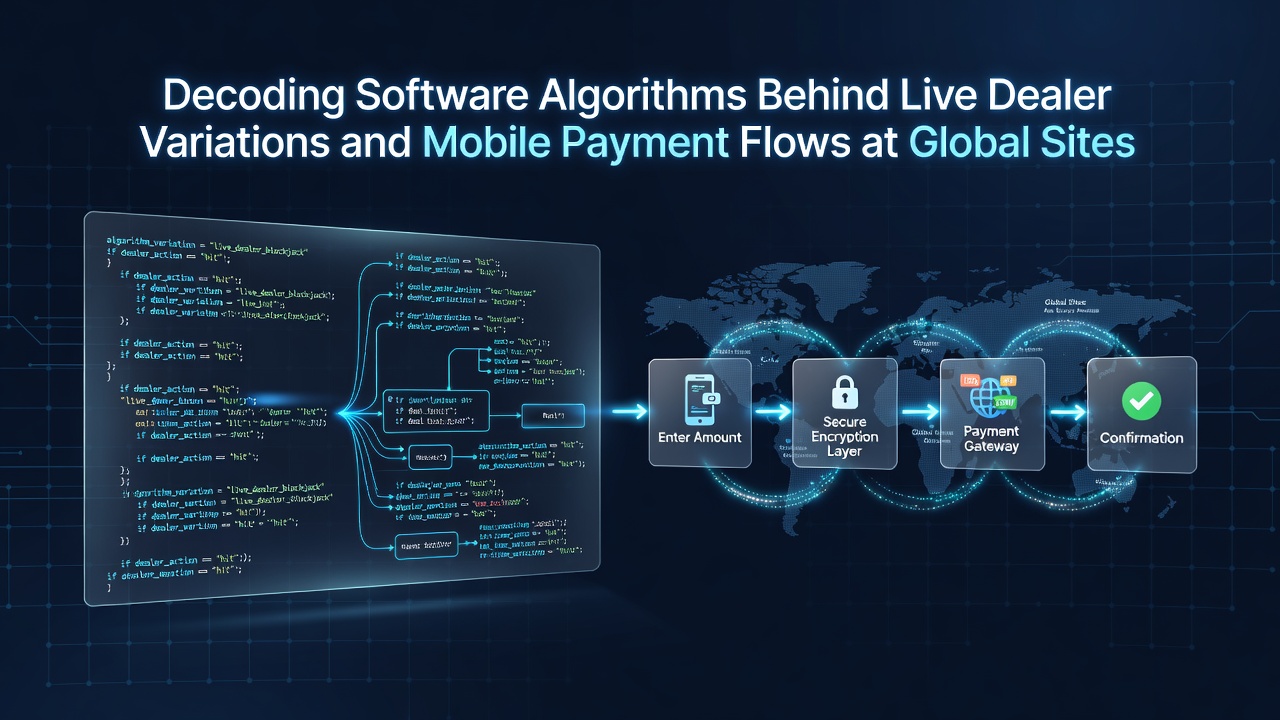
Software platforms at global casino sites rely on layered algorithms to manage live dealer variations and mobile payment flows, with each component handling distinct tasks from card shuffling simulations to encrypted transaction verification. These systems combine random number generation for game fairness, streaming protocols for real-time video delivery, and security frameworks that process deposits and withdrawals across multiple currencies and regions. Data from industry reports shows that operators updated core modules in early 2026 to accommodate new device standards and regulatory requirements emerging that summer. Live dealer games incorporate hybrid algorithms that blend physical card handling with digital overlays, allowing variations such as different betting limits, side wager options, and rule sets for games like blackjack or roulette. The backend uses pseudorandom number generators to determine card sequences before physical dealing occurs in studios, while optical recognition software tracks table actions and transmits results to player interfaces. Observers note that providers adjust these algorithms regionally to match local licensing rules, with some platforms implementing adaptive difficulty scaling based on aggregated player data patterns collected over millions of sessions. Mobile payment flows operate through separate algorithmic stacks that prioritize speed and encryption, routing transactions via application programming interfaces that connect to banking networks and digital wallets. These flows incorporate tokenization methods to replace card details with unique identifiers, followed by multi-factor authentication checks that analyze device fingerprints and behavioral signals before authorization completes. Research indicates that transaction success rates improved after major operators integrated machine learning models for fraud detection in late 2025, with processing times averaging under three seconds for verified accounts in tested markets.Core Components in Live Dealer Algorithm Design
Developers structure live dealer software around modular frameworks where each variation receives its own rule engine, yet all share common video synchronization layers. One module handles deck management through cryptographic shuffling that meets certification standards from testing laboratories, while another manages player interaction queues to prevent latency during peak hours. Experts have observed that studios in different time zones deploy redundant servers to maintain continuity, with failover algorithms automatically switching streams when primary connections drop below threshold metrics. Variations across sites often stem from configurable parameters in the game logic layer, such as payout tables for progressive side bets or commission rates on banker bets in baccarat. These parameters pull from centralized databases that operators update through secure administrative portals, ensuring consistency across mobile and desktop versions. Figures from platform audits reveal that sites handling traffic from multiple continents maintain separate configuration sets to align with currency conversions and tax calculations embedded in the payout algorithms.Payment Flow Algorithms and Security Layers
Payment processing at these sites follows sequenced steps that begin with user input validation and end with ledger reconciliation, all managed by distributed ledger technology in some newer implementations. Algorithms first verify account balances against real-time server records, then apply encryption standards like TLS 1.3 to protect data in transit before routing requests to external processors. Mobile-specific optimizations include adaptive compression for receipt generation and background syncing that resumes interrupted sessions without duplicating charges. Geographic differences appear in how these flows incorporate local banking protocols, with Asian markets often favoring instant bank transfer integrations and European sites emphasizing e-wallet compatibility. Data from transaction logs shows that July 2026 updates introduced enhanced biometric verification steps on mobile apps, reducing declined payments linked to regional network variations. Operators coordinate these changes through shared industry forums that exchange compliance checklists without revealing proprietary code structures.