Software Architecture Decisions Affecting Live Dealer Performance in Payment Network Integrations
Ulrich Friedrich · May 30, 2026

Software Architecture Decisions Affecting Live Dealer Performance in Payment Network Integrations
Software selections in casino operations determine how live dealer streams maintain consistent performance when linked to multiple payment networks, and these choices affect latency, transaction verification, and overall session reliability in ways that vary by provider architecture. Developers integrate real-time video feeds with backend systems that handle deposits and withdrawals, yet the underlying code frameworks dictate whether connections remain stable during peak activity periods across different financial rails.
Core Components of Live Dealer Software Frameworks
Live dealer platforms rely on specific engines for video encoding, player interaction tracking, and synchronization with external gateways, while payment network compatibility depends on API structures that process authorizations without introducing delays. Providers select modular designs that separate streaming services from transaction layers, and this separation allows independent scaling when network loads increase from high-volume regions or diverse currency pairs. Research indicates that frameworks built with microservices handle interruptions in one payment channel without cascading effects to dealer feeds, whereas monolithic systems often experience broader disruptions.
Integration Patterns Across Major Networks
Payment networks such as those operated by Visa and Mastercard require low-latency handshakes that align with dealer software timing protocols, and operators who choose providers with optimized middleware report fewer dropped connections during cross-border transfers. Crypto-based rails introduce additional variables through blockchain confirmation times, yet certain architectures incorporate caching mechanisms that keep live tables responsive even while awaiting final settlement. Data from industry analyses in early 2026 shows that platforms using adaptive queuing systems maintained higher uptime metrics when tested against both traditional card networks and emerging digital asset pathways.
Observers note that regional regulatory environments influence these software decisions, with standards from bodies like the Nevada Gaming Control Board emphasizing secure data partitioning between live feeds and financial modules. Australian research institutions have documented similar patterns where software that supports dynamic protocol switching reduces variance in dealer session stability across payment types. Those who've studied transaction logs across multiple sites find that integration quality directly correlates with fewer instances of stream freezing during withdrawal processing windows.
Stability Factors Tied to Specific Software Choices
Encoding standards and server distribution models play central roles, as providers that deploy edge computing nodes closer to payment processors achieve faster reconciliation without compromising video quality. Live dealer stability suffers when software lacks robust error-handling routines for network handoffs, and this becomes evident during simultaneous high-traffic events such as major sporting outcomes that drive increased betting volumes. Figures reveal that operators employing containerized deployments experienced measurable improvements in maintaining continuous dealer presence across fragmented payment ecosystems.
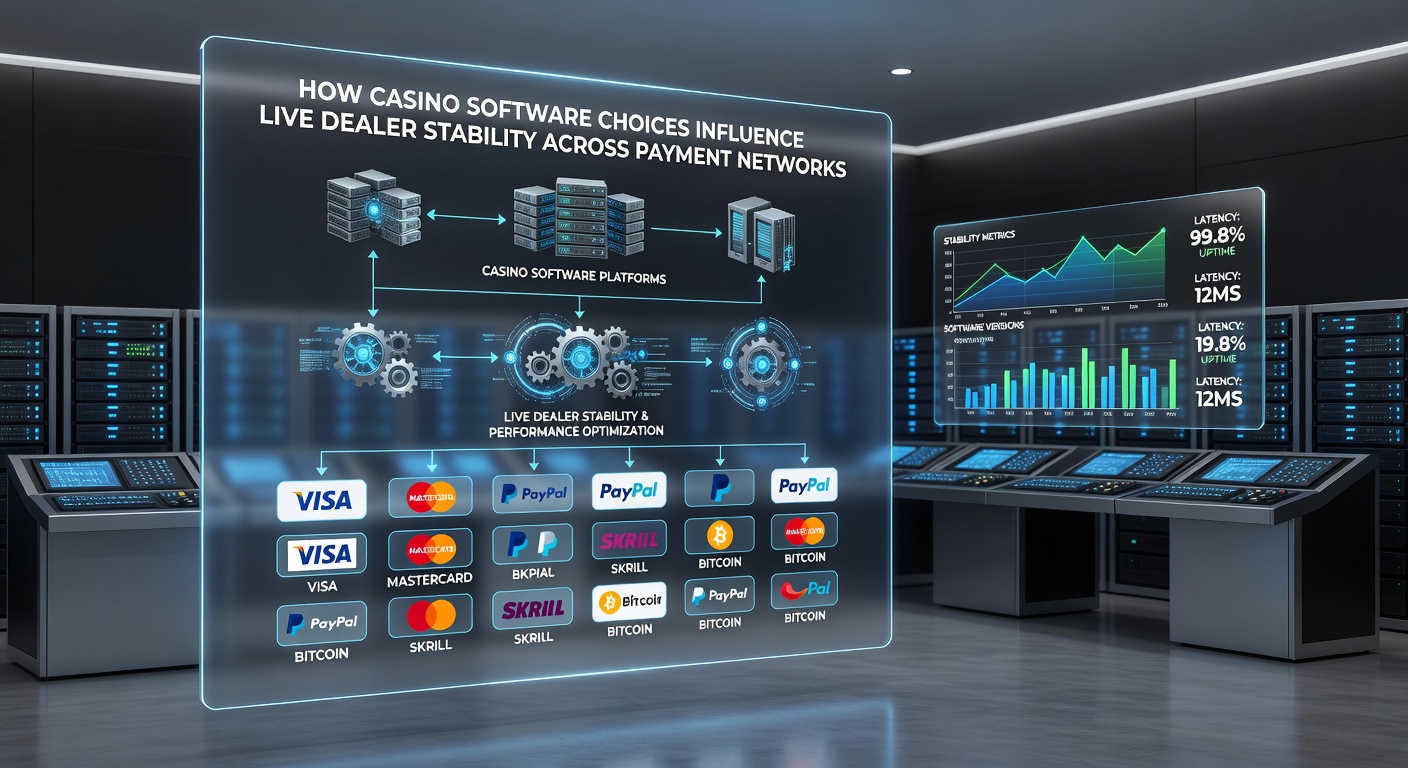
Take one operator who switched frameworks in late 2025 and observed reduced packet loss rates when routing bets through both fiat and alternative networks. The new architecture featured dedicated threads for payment callbacks that operated independently from the primary dealer synchronization loop, and this design prevented temporary gateway slowdowns from affecting ongoing table sessions. Studies from European gaming associations highlight comparable outcomes where layered security protocols enhanced rather than hindered cross-network performance.
Monitoring and Adaptation Mechanisms
Real-time analytics embedded within software suites allow operators to track stability metrics specific to each payment integration, and these tools often flag potential issues before they impact live dealer streams. Adaptive algorithms adjust buffer sizes based on detected network conditions, which helps sustain smooth video delivery during fluctuating transaction demands. Reports compiled ahead of a May 2026 industry summit outlined how predictive scaling features in select platforms contributed to consistent uptime across tested payment combinations.
Those who've examined failure modes across platforms point to differences in how providers manage session state persistence, especially when payment networks require multi-factor authentication mid-game. Software that maintains dealer context through these interruptions delivers uninterrupted experiences, whereas less sophisticated systems require full reconnections that break player engagement. Evidence from technical evaluations suggests that choices favoring open standards facilitate smoother interoperability with evolving payment technologies.
Conclusion
Platform architecture decisions ultimately shape the reliability of live dealer operations when spanning varied payment networks, and operators continue to refine these frameworks based on performance data gathered from diverse deployment environments. The interplay between streaming technology and transaction processing remains a focal point for maintaining operational consistency as networks evolve.