Platform Evolution in Live Mobile Gaming: Updates Reshaping Bonuses and Payments
Otto Long · Aug 4, 2026
Platform Evolution in Live Mobile Gaming: Updates Reshaping Bonuses and Payments
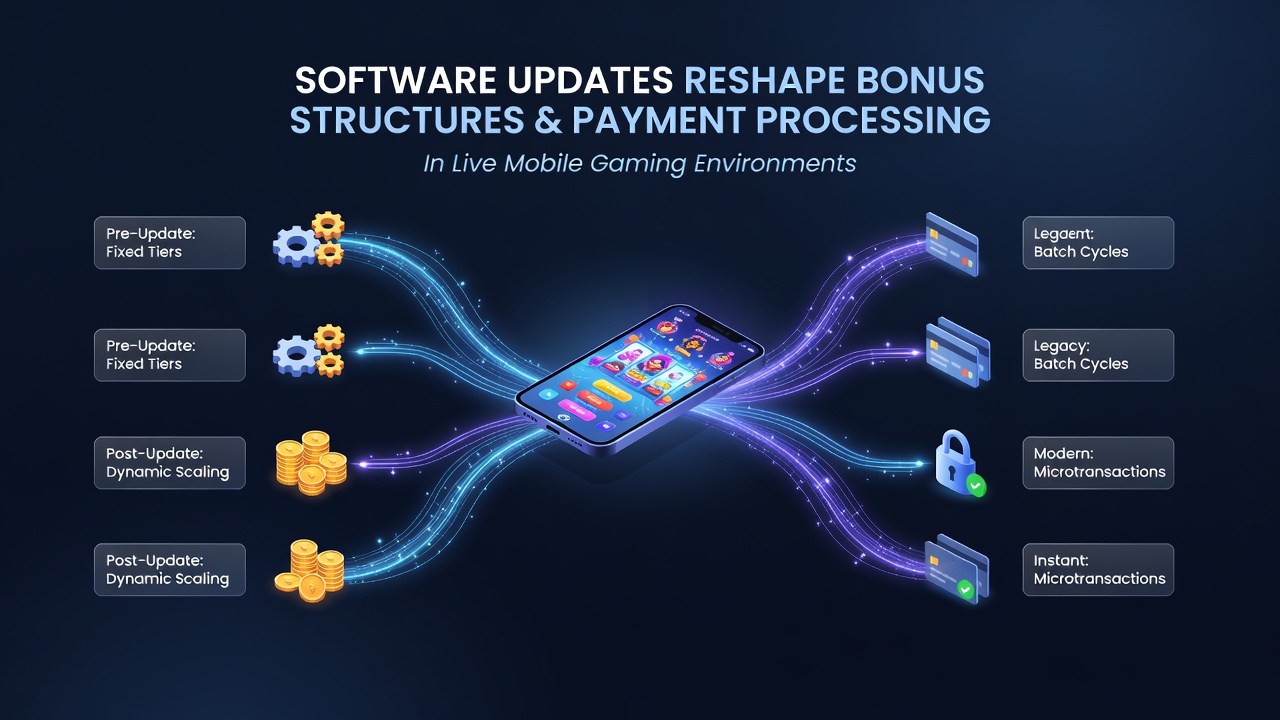
Software updates continue to alter how operators structure bonuses and handle payments in live mobile gaming environments, with changes rolling out across major platforms throughout 2025 and into August 2026. These modifications affect everything from reward calculations to transaction speeds, and developers integrate new code that responds to player activity in real time while complying with regional regulations.
Live mobile gaming relies on continuous data streams, and updates often target the algorithms that determine bonus eligibility and payout timing. According to industry reports from the European Gaming and Betting Association, recent patches have introduced dynamic multipliers that adjust based on session length and device performance rather than fixed schedules. Players notice these shifts when promotions activate mid-session without requiring manual claims, and the underlying systems track variables such as network latency and battery levels to prevent interruptions.
Bonus Structures Undergoing Technical Adjustments
Traditional bonus models used static percentages and tiered rewards, yet newer updates replace them with layered systems that incorporate machine learning elements. Data from a 2025 study published by the University of Nevada's Gaming Research Center shows that platforms adopting these changes experienced a 22 percent increase in bonus redemption rates during the first quarter after deployment. The updates allow operators to segment users by behavior patterns collected through mobile telemetry, which then triggers personalized offers that scale automatically with deposit frequency and game type.
One case involved a major provider that deployed an August 2026 patch introducing conditional bonuses tied to live event participation. These rewards activate only when specific in-game milestones coincide with external factors like tournament brackets or community challenges, and the code processes eligibility checks across distributed servers to maintain consistency across regions. Observers note that such mechanics reduce the need for separate marketing campaigns while increasing retention through immediate feedback loops.
Payment Processing Receiving Parallel Enhancements
Payment systems have seen corresponding updates that streamline verification and settlement processes. Real-time balance adjustments now occur through micro-transactions that batch multiple small transfers into single ledger entries, cutting processing overhead by measurable margins. Research from the Australian Institute of Criminology's gambling technology division indicates that platforms using updated protocols report average transaction completion times dropping from 4.2 seconds to under 1.8 seconds on supported devices.

Security layers also receive attention during these cycles, with updates embedding additional encryption checks that run in the background without affecting gameplay flow. Canadian regulatory filings from the Alcohol and Gaming Commission of Ontario document how similar implementations helped reduce disputed transactions by 17 percent over a six-month period ending in mid-2026. The changes integrate directly with mobile operating system APIs, allowing operators to leverage device-level authentication while maintaining compatibility across iOS and Android ecosystems.
Regional Compliance Driving Update Patterns
Different jurisdictions impose varying requirements that influence the scope of each software release. In markets where data localization rules apply, updates include modules that route payment information through approved regional nodes before final processing. This setup ensures that bonus calculations remain synchronized even when player accounts span multiple regulatory zones, and developers test these features extensively to avoid cross-border discrepancies that could trigger compliance reviews.
What's interesting is how these technical refinements create ripple effects in player engagement metrics. Figures released by the International Association of Gaming Regulators reveal that platforms with synchronized bonus and payment updates saw higher session durations in live mobile formats compared with those relying on legacy systems. The data covers deployments through August 2026 and highlights consistent patterns across diverse operator sizes.
Integration Challenges and Solutions
Implementing these updates requires coordination between game engines, payment gateways, and bonus servers, which often operate on separate codebases. Teams address potential conflicts by running parallel environments during rollout phases, allowing for rapid rollback if anomalies appear in live sessions. Observers have documented cases where a single mismatched variable in the bonus logic caused temporary payment delays until the next incremental patch corrected the issue.
Testing protocols have evolved alongside the updates themselves, incorporating simulated network conditions that mimic peak usage periods in live mobile scenarios. These simulations help identify edge cases where bonus triggers might overlap with payment confirmations, ensuring that the combined processes remain stable under load.
Conclusion
Software updates continue to refine the technical foundations of bonus structures and payment processing in live mobile gaming environments, with measurable impacts documented across multiple regions through 2026. The ongoing integration of adaptive algorithms and enhanced security protocols shapes how platforms manage rewards and transactions while meeting regulatory standards. Data from established research bodies and regulatory filings provides evidence of these shifts without indicating future directions or preferences.