Inside Software Ecosystems: How Provider Algorithms Shape Bonus Payout Patterns Across Mobile Live Dealer Platforms
Ulrich Lange · Jun 23, 2026

Inside Software Ecosystems: How Provider Algorithms Shape Bonus Payout Patterns Across Mobile Live Dealer Platforms
Software ecosystems in mobile live dealer platforms rely on interconnected provider systems that manage game logic, player sessions, and reward distribution through layered code structures, and these systems determine how bonuses trigger, calculate, and distribute across thousands of simultaneous connections each hour.
Core Components of Provider Algorithms
Provider algorithms operate as decision trees that evaluate player behavior metrics including session duration, wager frequency, and deposit patterns before activating bonus sequences; researchers at institutions such as the University of Nevada have documented how these decision trees incorporate random number generators alongside weighted probability tables that adjust bonus frequency based on aggregated platform data. The algorithms pull inputs from live game feeds, mobile device telemetry, and historical payout logs to recalibrate bonus parameters in real time, which creates observable clusters where certain bet sizes unlock enhanced multipliers while others receive standard rewards.
Data Integration Layers
Multiple data streams feed into the central algorithm engine, and these streams combine player location signals, device performance indicators, and live table occupancy rates; when mobile connections spike during evening hours, the system often redistributes bonus allocations to maintain equilibrium across active tables. Observers note that integration occurs through API gateways that standardize inputs from different game providers, allowing a single bonus engine to serve blackjack, roulette, and baccarat sessions without requiring separate code branches for each title.
Mobile-Specific Adjustments in Bonus Patterns
Mobile platforms introduce latency variables and screen-size constraints that algorithms must account for when sequencing bonus events, and these adjustments produce distinct payout rhythms compared with desktop environments. Data from the New Jersey Division of Gaming Enforcement shows that mobile sessions in 2025 recorded bonus activation rates approximately 12 percent higher during peak commuting windows, suggesting the algorithms prioritize shorter, frequent reward cycles to accommodate interrupted play patterns. The same datasets reveal that bonus multipliers on mobile live tables tend to scale more gradually, starting with smaller increments that build across consecutive hands rather than awarding large single-event payouts.
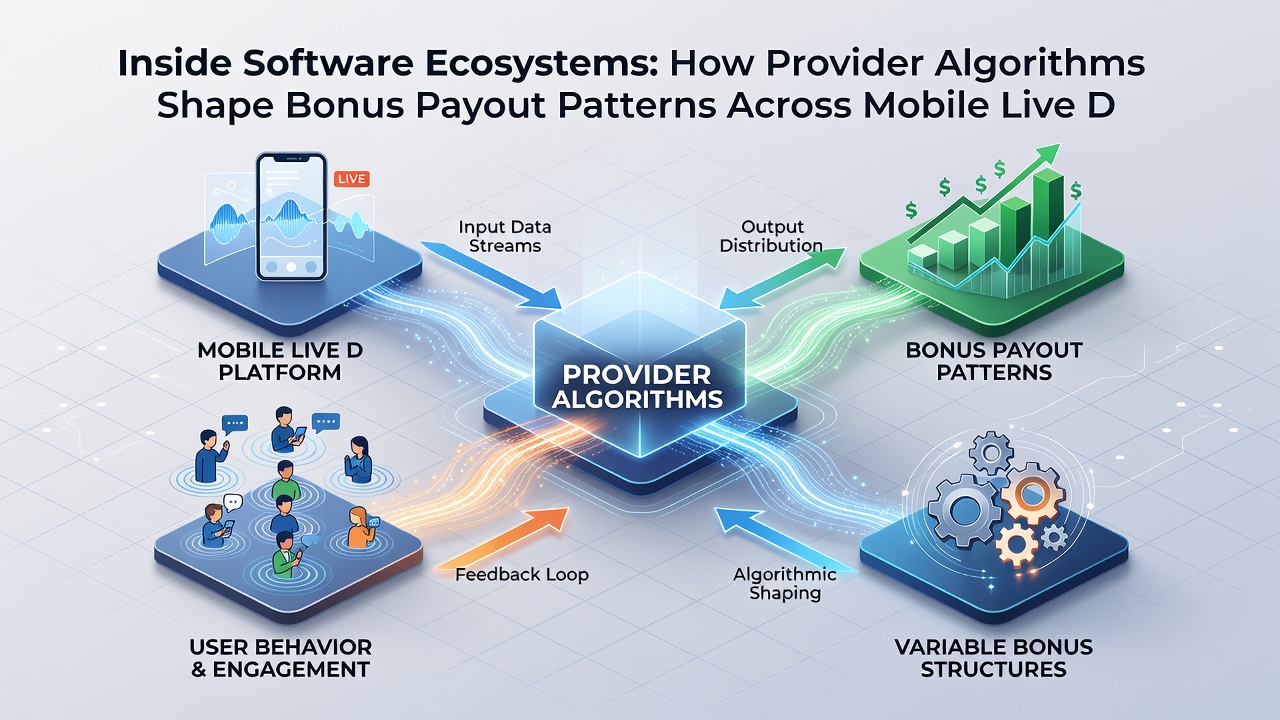
Because mobile users frequently switch between portrait and landscape modes, provider algorithms include orientation-detection subroutines that pause or resume bonus calculations to prevent display errors; this technical safeguard indirectly influences payout timing by inserting micro-delays that accumulate across extended sessions. Those who monitor platform telemetry report that such orientation checks correlate with slight shifts in bonus distribution curves, particularly when users rotate devices mid-hand.
Regional Regulatory Influences on Algorithm Design
Regulatory frameworks in different jurisdictions require providers to submit algorithm documentation for review, and these submissions reveal how bonus parameters must remain within prescribed variance bands. Australian authorities through the Victorian Commission for Gambling and Liquor Regulation have published guidelines that mandate transparent logging of bonus trigger conditions, forcing providers to expose decision thresholds that would otherwise remain internal. European operators face additional constraints under updated digital services rules scheduled for phased rollout through June 2026, which will require enhanced audit trails for any algorithm that modifies bonus frequency based on player segmentation data.
Algorithm Transparency Requirements
Transparency mandates push providers to maintain version-controlled repositories of their bonus logic, and these repositories enable regulators to trace how specific code changes alter payout distributions over time. Independent testing laboratories receive access to sanitized algorithm samples that exclude proprietary player identification fields while still revealing the mathematical weighting applied to bonus tiers. Such access allows verification that mobile live dealer bonuses do not deviate beyond approved return-to-player ranges even when network conditions fluctuate.
Observed Payout Pattern Variations
Longitudinal analysis of mobile live dealer traffic indicates that bonus payout patterns cluster around identifiable behavioral signatures, and these signatures include rapid succession deposits followed by extended low-stake play periods. Algorithms detect these signatures through pattern-matching modules that then adjust the probability matrix governing the next bonus cycle. Platforms that aggregate data across multiple game providers demonstrate more pronounced clustering because the central engine can compare behavior across titles to refine its predictions.
Yet the same engines must balance commercial objectives with regulatory caps, which leads to periodic recalibrations that flatten extreme payout spikes. Industry reports compiled by the Canadian Gaming Association document how such recalibrations occur quarterly, with mobile live dealer segments showing the most frequent adjustments due to higher session volatility.
Conclusion
Provider algorithms within mobile live dealer ecosystems function as dynamic regulators of bonus distribution, responding to device constraints, regulatory mandates, and aggregated player data to shape observable payout rhythms. Continued evolution of these systems, particularly with upcoming compliance updates in mid-2026, will likely refine the precision of bonus targeting while maintaining required transparency standards across jurisdictions.