Examining Algorithmic Systems That Govern Fairness Metrics in Live Dealer Environments
Mia Coleman · Jun 9, 2026

Examining Algorithmic Systems That Govern Fairness Metrics in Live Dealer Environments
Live dealer platforms combine physical tables with digital oversight systems, and software algorithms play a central role in tracking game outcomes while calculating fairness metrics such as return-to-player percentages and deviation patterns. These systems process data streams from cameras, card readers, and player interfaces to generate reports that regulators and operators review regularly.
Core Components of Live Dealer Algorithm Frameworks
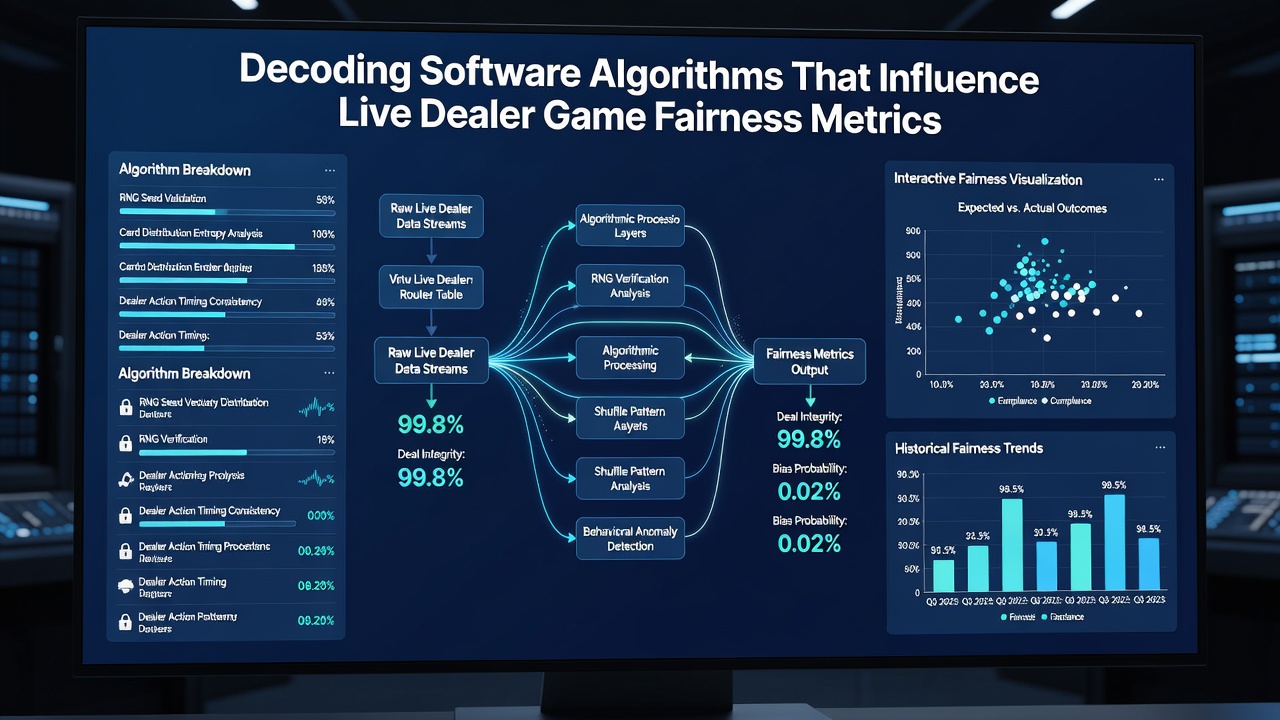
Developers integrate multiple layers of code that handle real-time data capture, statistical modeling, and anomaly detection, whereas hardware sensors feed continuous inputs into centralized servers that apply mathematical models to each round. One common approach involves hybrid random number generators that supplement physical shuffles when decks reach certain depletion thresholds, and these generators undergo periodic testing against established standards from bodies like the Nevada Gaming Control Board.
Card recognition software employs computer vision techniques to verify every dealt card against expected sequences, while machine learning models compare observed distributions against theoretical probabilities derived from standard decks. Observers note that such verification loops run in milliseconds, allowing platforms to flag irregularities before they affect multiple hands.
Data Processing and Metric Calculation Methods
Algorithms aggregate thousands of individual game results into summary statistics that include win rates, streak lengths, and payout ratios across different table limits. These calculations rely on moving averages and confidence intervals that adjust dynamically as new rounds complete, and operators receive automated alerts when metrics drift beyond predefined tolerance bands. Research from the University of Nevada, Las Vegas gaming laboratories shows that consistent application of these models helps maintain alignment between theoretical and actual performance over extended periods.
Additional modules track player-specific patterns without storing personal identifiers, focusing instead on aggregate behavior across sessions, while time-stamped logs support forensic reviews when disputes arise. In June 2026 several European testing houses plan to roll out updated certification protocols that require deeper auditing of these tracking modules before platforms receive renewed approvals.
Regulatory Oversight and Independent Verification Practices
Government agencies in multiple jurisdictions mandate that operators submit algorithm documentation and source code samples for external review, and accredited laboratories examine both the mathematical foundations and the implementation details. The Australian Communications and Media Authority requires annual re-testing of fairness systems, whereas Canadian provincial regulators emphasize ongoing monitoring rather than one-time approvals.
Independent auditors run parallel simulations that replicate live dealer sequences using the same seed values and rulesets, then compare outputs to confirm consistency. When discrepancies appear, operators must provide explanations supported by raw data logs before resuming normal operations.
Integration Challenges and Technical Adjustments
Network latency and camera resolution variations can introduce noise into data streams, prompting developers to incorporate error-correction routines that smooth minor fluctuations without masking genuine anomalies. Multi-site operators often deploy centralized dashboards that normalize metrics across different regulatory environments, allowing technical teams to identify platform-wide trends while respecting local reporting requirements.
Updates to underlying game rules or payout structures trigger re-calibration of fairness algorithms, and version control systems maintain historical snapshots so that past results remain traceable. Industry reports from the European Gaming and Betting Association indicate that such structured update cycles reduce the frequency of metric recalculations needed after rule changes.
Conclusion
Software algorithms that underpin live dealer fairness metrics continue to evolve alongside hardware improvements and regulatory expectations, with verification processes drawing on data from multiple geographic sources to maintain consistent standards. Continued collaboration between developers, laboratories, and oversight bodies supports transparent reporting that benefits both operators and players through reliable performance tracking.