Cross-Device Player Flows in Online Casinos at Peak Usage Times
Otto Long · Aug 13, 2026

Cross-Device Player Flows in Online Casinos at Peak Usage Times
Analysts track how casino participants move between desktop and mobile environments during periods of highest activity, and data collected through August 2026 reveals consistent patterns across multiple markets. Sessions that begin on desktop often transition to mobile as users change locations or schedules, while the reverse occurs when players settle at fixed workstations. These movements align with established peak windows such as evening hours between 7 pm and 11 pm in major time zones.
Defining Peak Activity Windows
Peak hours emerge from aggregated session logs that operators compile across regions, and figures show elevated engagement from 6 pm onward on weekdays with sharper spikes on weekends. Researchers at institutions like the University of Nevada Las Vegas gaming laboratory compile these records to map device handoffs, noting that mobile uptake rises sharply after 8 pm as participants leave offices or commute. Desktop usage holds steadier during early evening blocks before declining as mobility increases.
Observed Migration Pathways
Players initiate sessions on desktop machines in roughly 55 percent of tracked cases during initial peak entry points, according to reports from the New Jersey Division of Gaming Enforcement, yet mobile captures the majority of subsequent activity once users depart those starting points. Transitions frequently occur within the first 20 minutes of play, driven by notifications or changes in physical setting. Data sets from the Canadian Gaming Association indicate that 38 percent of evening sessions involve at least one device switch, with most flows running from desktop toward mobile rather than the opposite direction.
Factors Driving Device Changes
Network stability and screen size influence these shifts, while location-based triggers such as travel between home and public spaces accelerate mobile adoption. Studies compiled by the Australian Institute of Family Studies on digital leisure habits show that participants favor handheld devices when multitasking or when away from primary computers. Software updates rolled out in mid-2026 improved cross-device continuity for several major platforms, reducing session drop-offs during switches and allowing progress to carry over without interruption.
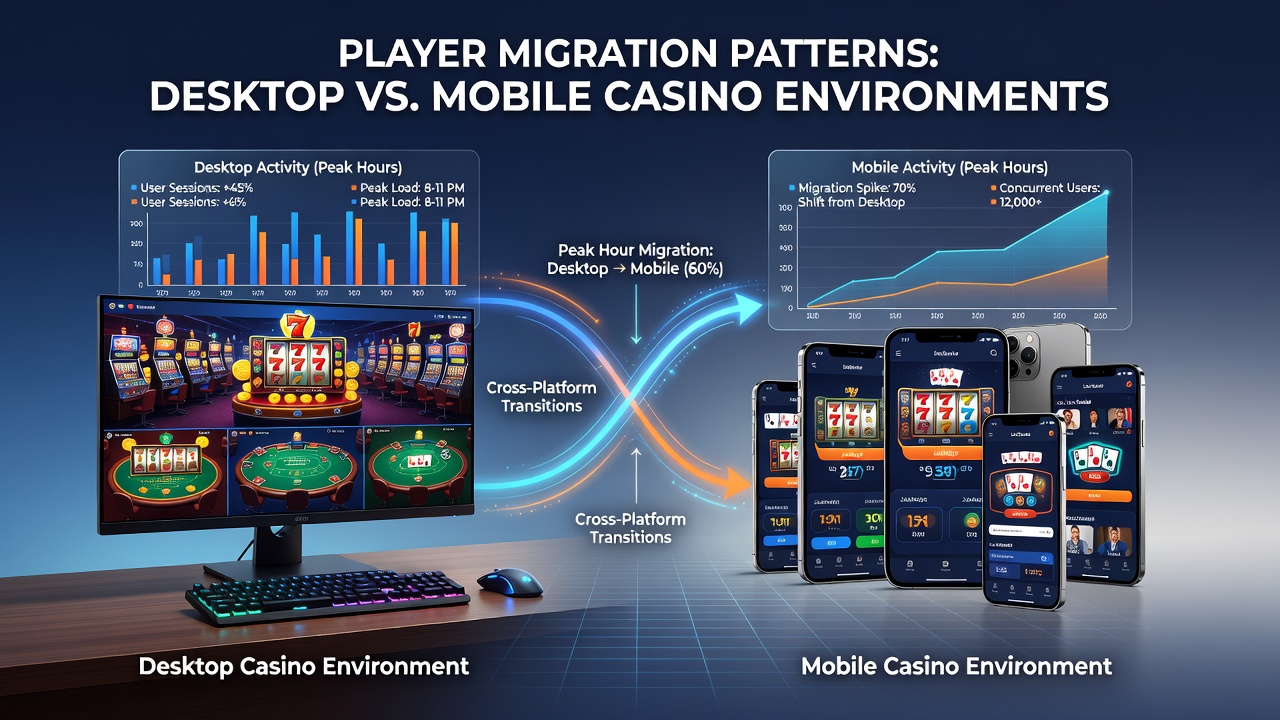
Latency differences also factor into decisions, since mobile networks in urban centers deliver faster response times during congested desktop usage periods. Observers note that loyalty programs offering seamless rewards across platforms encourage repeated migrations, as points accumulate regardless of entry point.
Regional Variations in Patterns
European markets display higher baseline mobile penetration during peaks compared with North American counterparts, with operators reporting mobile shares exceeding 70 percent after 9 pm local time. In contrast, data from Australian regulatory summaries highlight more balanced splits that favor desktop earlier in the evening before tilting mobile. These differences trace to infrastructure maturity and regulatory frameworks that shape device availability.
Technical Infrastructure Supporting Transitions
Cloud-based account systems enable teh observed flows by storing game states centrally, so users resume without loss when changing hardware. Security protocols updated through 2026 incorporate device fingerprinting that maintains session integrity across switches. Industry reports emphasize that platforms investing in responsive design experience lower abandonment rates during these handoffs, as interfaces adapt automatically to screen dimensions and input methods.
Conclusion
Device migration during peak casino hours follows measurable routes shaped by timing, location, and platform capabilities, with records through August 2026 confirming desktop-to-mobile as the dominant direction. Continued monitoring by research bodies and regulatory agencies supplies the metrics that operators use to refine access points and maintain continuity for participants moving between environments.