Blockchain Protocols Transforming Verification in International Casino Payment Networks
Mia Coleman · Jun 4, 2026

Blockchain Protocols Transforming Verification in International Casino Payment Networks
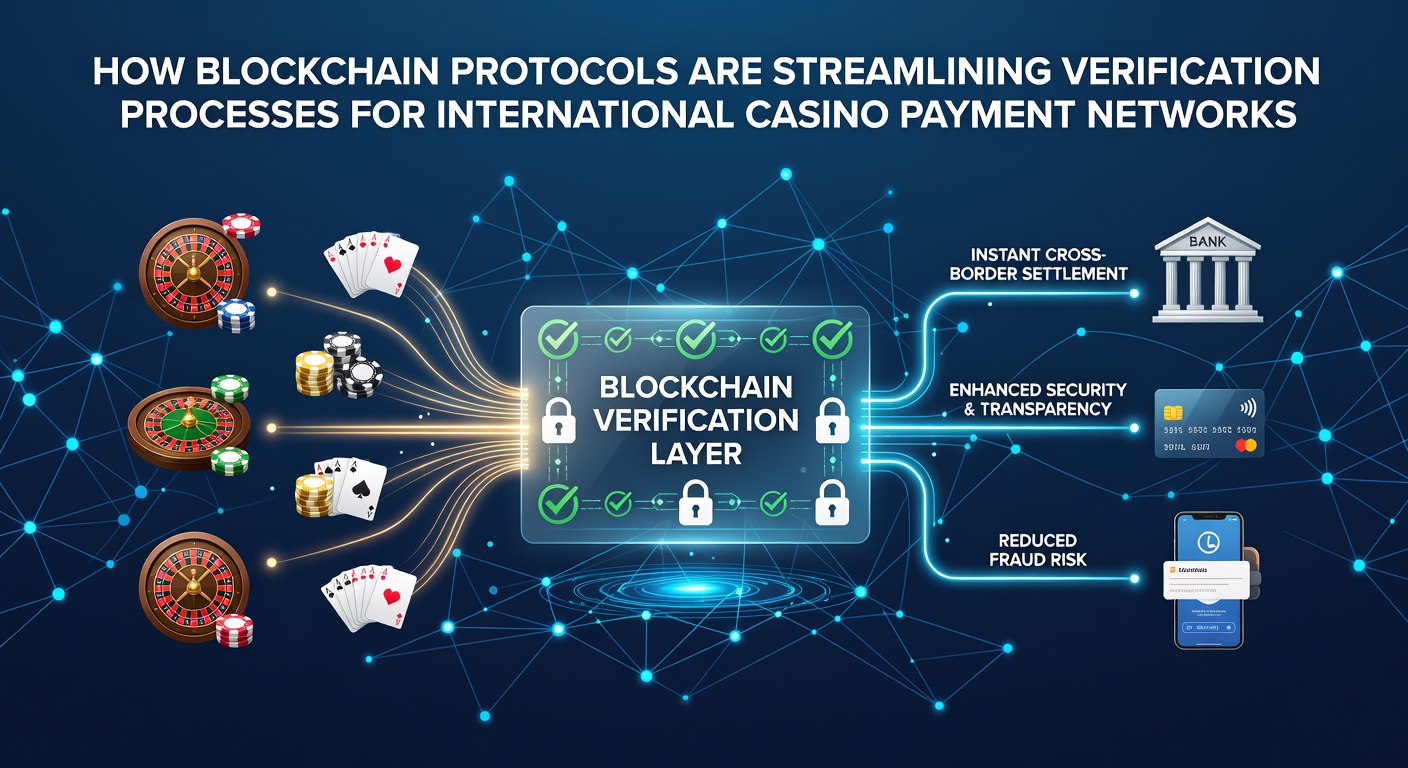
Blockchain protocols have integrated into international casino payment networks to handle verification steps that once required multiple intermediaries and extended processing times. These systems rely on distributed ledgers that record transactions across numerous nodes, creating immutable records that participants can audit without central authority intervention.
Operators in regions such as Europe, Asia, and the Americas have adopted these protocols to manage cross-border transfers where traditional banking channels often introduce delays. Smart contracts execute predefined conditions automatically once verification criteria are met, which reduces manual checks and associated administrative overhead.
Core Mechanisms Behind Streamlined Verification
Public and permissioned blockchains both appear in casino payment setups, yet permissioned variants tend to dominate because they allow controlled access while maintaining transparency among approved entities. Each block contains cryptographic hashes that link to previous entries, forming chains resistant to retroactive alterations. When a player initiates a deposit or withdrawal, the protocol validates wallet addresses and transaction amounts against consensus rules before finalizing the record.
Zero-knowledge proofs represent one technique that permits verification of identity attributes without exposing underlying personal data. Participants prove compliance with age or residency requirements through mathematical attestations that the network confirms independently. This approach aligns with data protection standards enforced by regulatory bodies in multiple jurisdictions.
Integration with Existing Financial Infrastructure
Casino networks combine blockchain layers with conventional payment processors to create hybrid models. A transaction might begin through a fiat gateway before converting to a tokenized asset on the blockchain for the verification phase, then reconvert upon completion. Such arrangements maintain compatibility with banking systems that still handle the majority of global volume while introducing efficiency gains in the settlement stage.
Industry reports indicate that settlement times for international transfers have shortened from several business days to under an hour in networks utilizing these protocols. Data compiled by research institutions tracking fintech adoption shows measurable reductions in reconciliation errors because every step leaves a verifiable audit trail.
Regulatory Alignment Across Regions
Authorities in Malta, Singapore, and parts of Canada have issued guidance that accommodates blockchain-based verification while requiring operators to meet anti-money laundering thresholds. These frameworks emphasize that on-chain records can supplement traditional documentation rather than replace it entirely. As of June 2026, several licensed platforms reported expanded use of protocol-level attestations in response to updated compliance directives from regional bodies.
One study published through academic channels examined transaction datasets from multi-jurisdictional operators and found that blockchain verification cut identity confirmation steps by integrating reusable credentials across different platforms. The analysis covered operations in both established markets and emerging ones, highlighting consistent patterns in reduced processing friction.
Technical Standards and Interoperability Efforts
Organizations developing standards for distributed ledger technology have focused on creating common interfaces that allow different blockchain implementations to exchange verification data. These efforts address fragmentation that previously limited cross-network functionality. Casinos operating in multiple countries benefit when a single verified identity credential satisfies requirements from separate regulators.
Encryption methods embedded in these protocols protect sensitive parameters during transmission, while consensus algorithms determine which nodes hold authority to approve new entries. Variations such as proof-of-stake and delegated proof-of-authority balance speed with security depending on the network scale and participant requirements.
Observed Outcomes in Operational Settings
Payment processors serving casino groups have documented fewer chargeback incidents after implementing blockchain verification layers, since transaction finality occurs earlier in the process. Observers note that disputes decrease when both parties share access to the same immutable record of events. Geographic distribution of nodes further contributes to resilience against localized outages that might affect centralized servers.
Training programs for compliance teams now include modules on interpreting blockchain analytics tools that flag unusual patterns without exposing full user histories. These tools draw from public ledger data supplemented by off-chain sources to maintain comprehensive oversight.
Conclusion
Blockchain protocols continue to modify verification workflows within international casino payment networks by emphasizing cryptographic certainty and automated execution over repeated manual reviews. Developments through mid-2026 reflect ongoing adjustments to regulatory expectations and technical capabilities across varied jurisdictions. The resulting systems maintain auditability while supporting the volume and speed demanded by global operations.